Learn

Ancient Coins: Learn more about the History, Value, and Meaning

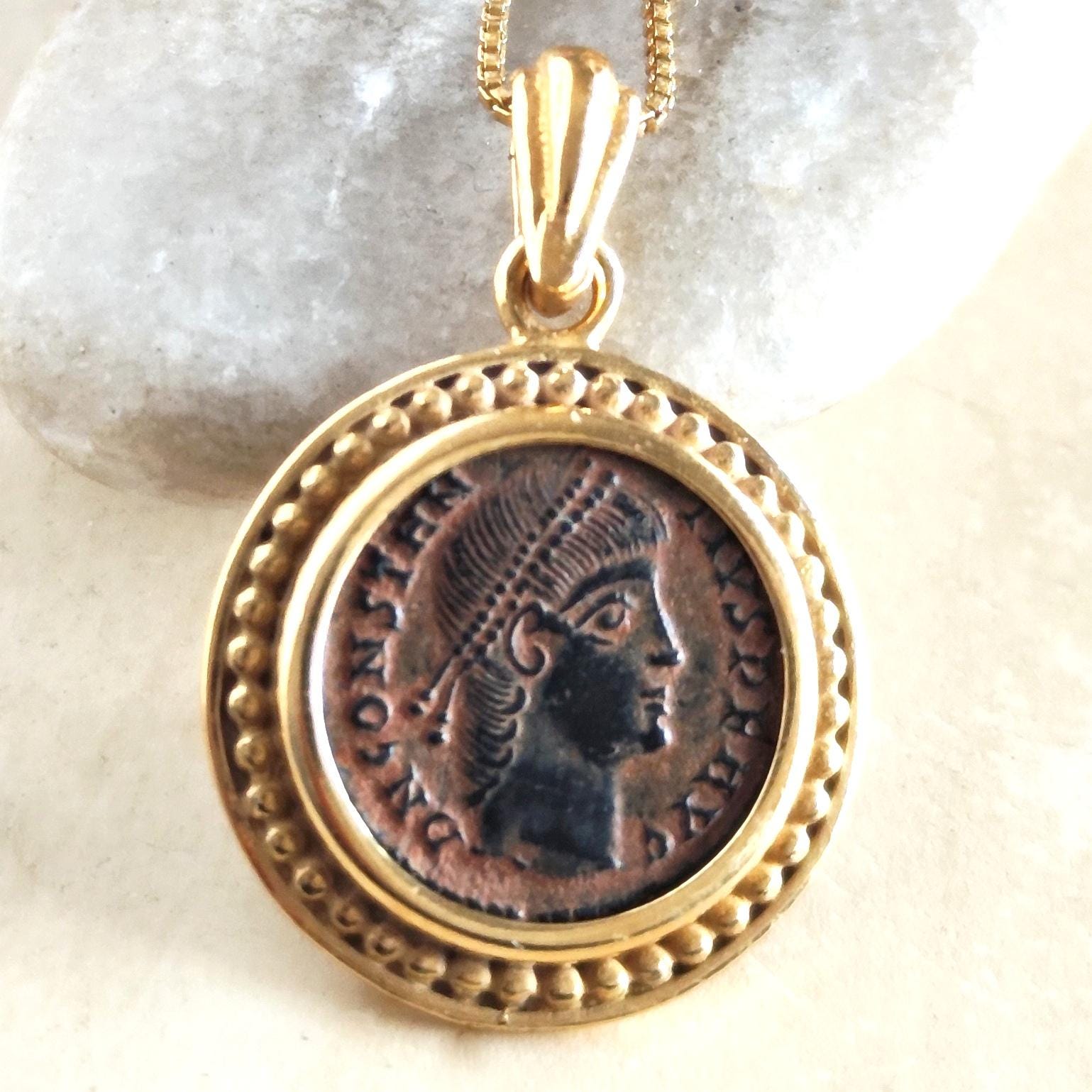
Ancient Roman coin Medallion

Roman Coins

Roman coins such as the denarius and sestertius offer a rare glimpse into the daily life, economy, and political messaging of the Roman Empire. These coins were not just currency,they were tools of communication, carrying the image of emperors and symbols of power across vast territories.

A silver denarius, one of the most widely used Roman coins, could typically buy basic necessities such as bread, wine, or olive oil. Historical records suggest that a Roman soldier earned around one denarius per day, giving modern collectors a surprisingly concrete sense of its real-world value.

Beyond purchasing power, Roman coins also reflect economic instability. Over time, emperors reduced the silver content in coins to fund wars and public works, effectively creating inflation. This means that identical-looking coins from different periods may have held very different value.

Another fascinating aspect is circulation. Coins discovered far from their original mint, sometimes across continents, reveal ancient trade routes and movement of people. Worn coins often indicate everyday use, while well-preserved examples may have been stored in hoards, possibly during times of crisis.

Understanding these details transforms each coin from a simple object into a piece of economic and human history. Explore these stories further through our Roman Coins Jewelry Collection.
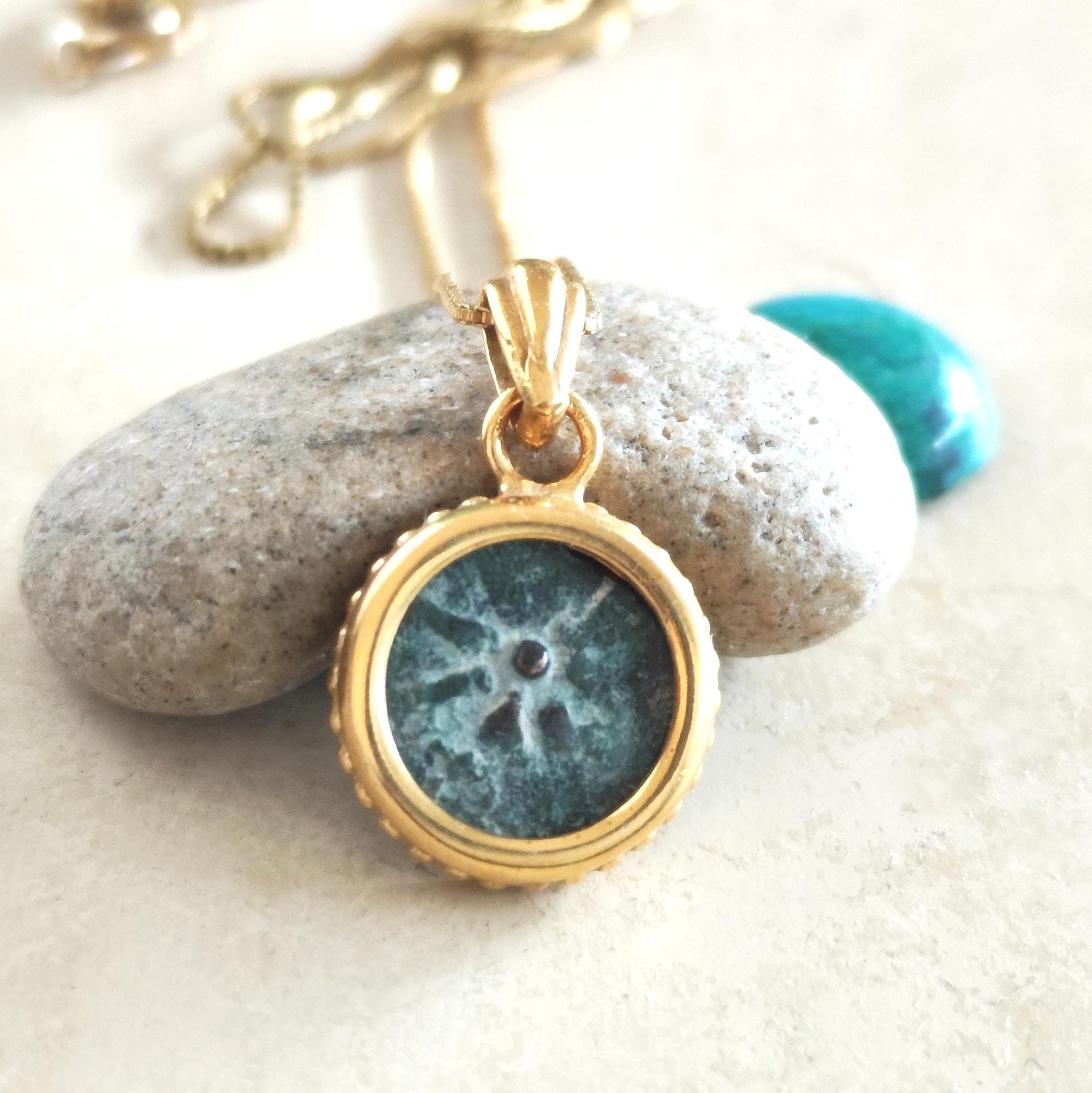
Ancient Widow's Mite bronze coin from Judea

Widow's Mite Coins

Widow’s Mite coins are among the smallest and most modest coins of the ancient world, yet they carry one of the most powerful historical and cultural narratives. Minted in Judea during the Second Temple period, these bronze coins reflect the daily realities of life under Roman rule.

In practical terms, a single Widow’s Mite had extremely low purchasing power, likely insufficient even for a modest meal. However, their importance lies in their symbolic meaning. Referenced in biblical texts, they represent generosity and sacrifice, as even the smallest offering held deep significance.

There are several variations of these coins, often attributed to rulers such as Alexander Jannaeus. Subtle differences in inscriptions and symbols allow historians to date them and identify their place of origin, making each coin a small but valuable historical document.

Interestingly, many surviving examples show heavy wear, suggesting they circulated widely among lower-income populations. Unlike more valuable coins that were hoarded, these were actively used in everyday transactions, offering rare insight into the economic lives of ordinary people.

This combination of historical context and symbolic meaning makes Widow’s Mite coins uniquely compelling. You can also discover them as meaningful artifacts in our Widow's Mite Jewelry Collection.

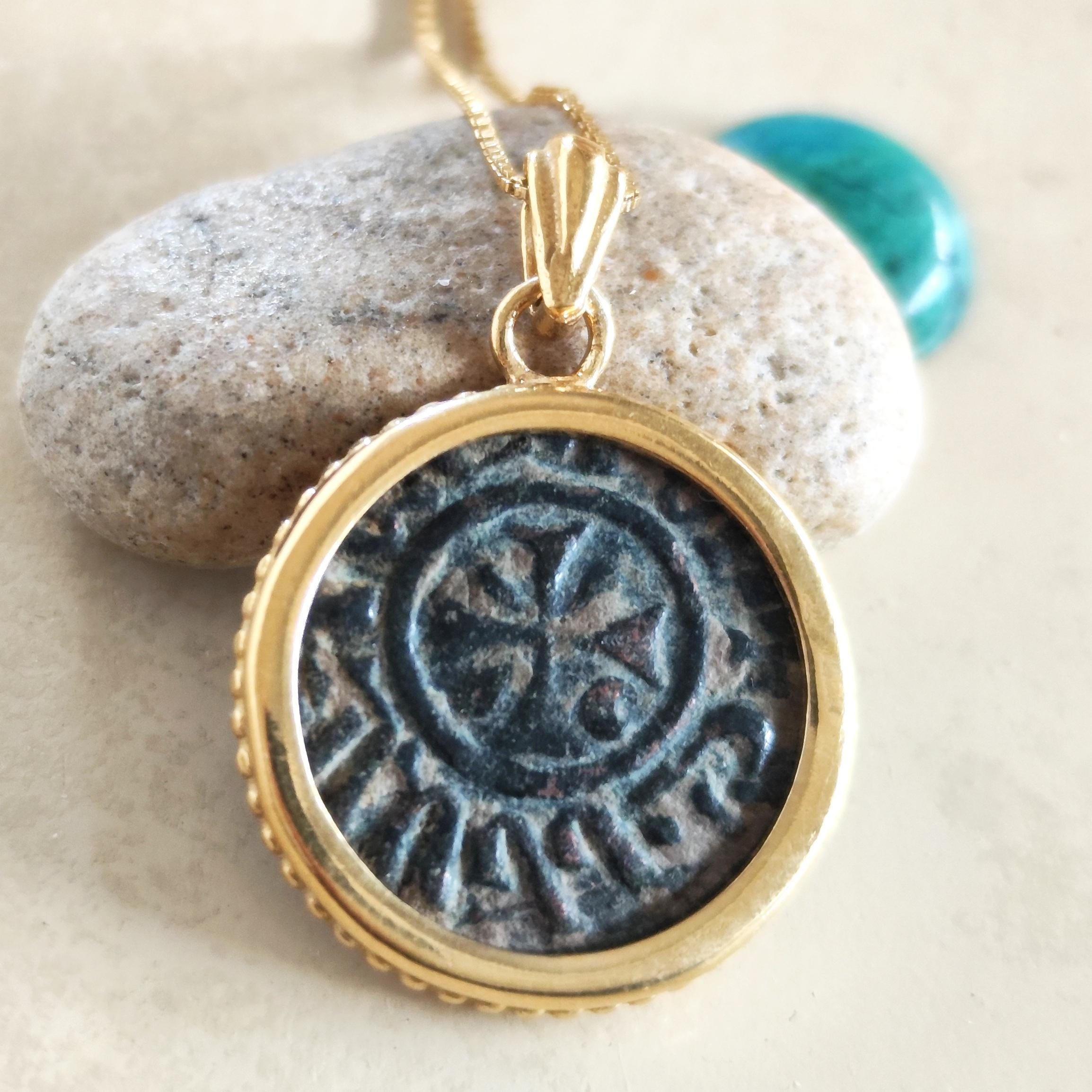
Medieval Crusader silver coin with cross and inscriptions

Crusade Coins

Crusadrs coins provide a fascinating connection to the medieval world, reflecting the complex interaction between religion, politics, and commerce during the Crusades. Minted in regions across the Holy Land and Europe, these coins were part of a rapidly shifting economic landscape.

Unlike the standardized coinage of the Roman Empire, Crusade coins often varied widely in design and quality. Many feature crosses, Latin inscriptions, or the names of rulers, clearly linking them to specific crusader states or campaigns.

These coins played a crucial role in funding military expeditions and supporting trade between Europe and the eastern Mediterranean. In some cases, their metal content was reduced due to shortages, providing valuable clues about the financial pressures faced during prolonged campaigns.

Archaeological discoveries of Crusade coin hoards—often found in castles or along trade routes—help historians reconstruct patterns of movement, trade, and conflict. Some coins were minted for very short periods, making them particularly rare and desirable for collectors.

By studying Crusader coins, one gains insight not only into their monetary use but into the broader story of medieval society. These historical pieces are also featured in our Crusade Coins Jewelry Collection.

How Do Experts Identify and Date Ancient Coins?

Ancient coins may look small and worn, but historians can often identify and date them with surprising accuracy. By studying the images, symbols, inscriptions, and metal used to mint a coin, experts can determine when and where it was produced and sometimes even the ruler who issued it.

One of the most important clues is the design of the coin. Roman coins frequently feature portraits of emperors along with inscriptions that include their names and titles. These inscriptions can often place the coin within a very specific historical period.

Coins from ancient Judea, including the famous Widow’s Mite, often use symbolic imagery rather than portraits. Symbols such as anchors, stars, cornucopias, or ancient scripts in Hebrew or Greek can help scholars connect the coin to a particular ruler or era.

Experts also examine the metal and weight of the coin. Bronze, silver, and gold coins served different roles in ancient economies, and their weight standards changed over time. By comparing a coin with catalogued examples recorded by numismatists, researchers can usually estimate its date and origin.

Even worn coins can reveal remarkable details about ancient trade, politics, and daily life. What might appear to be a simple object is actually a small historical document that has survived for centuries.

You can explore authentic ancient coins preserved in jewelry in our Ancient Coin Jewelry Collection.